Summer hike : La Villette
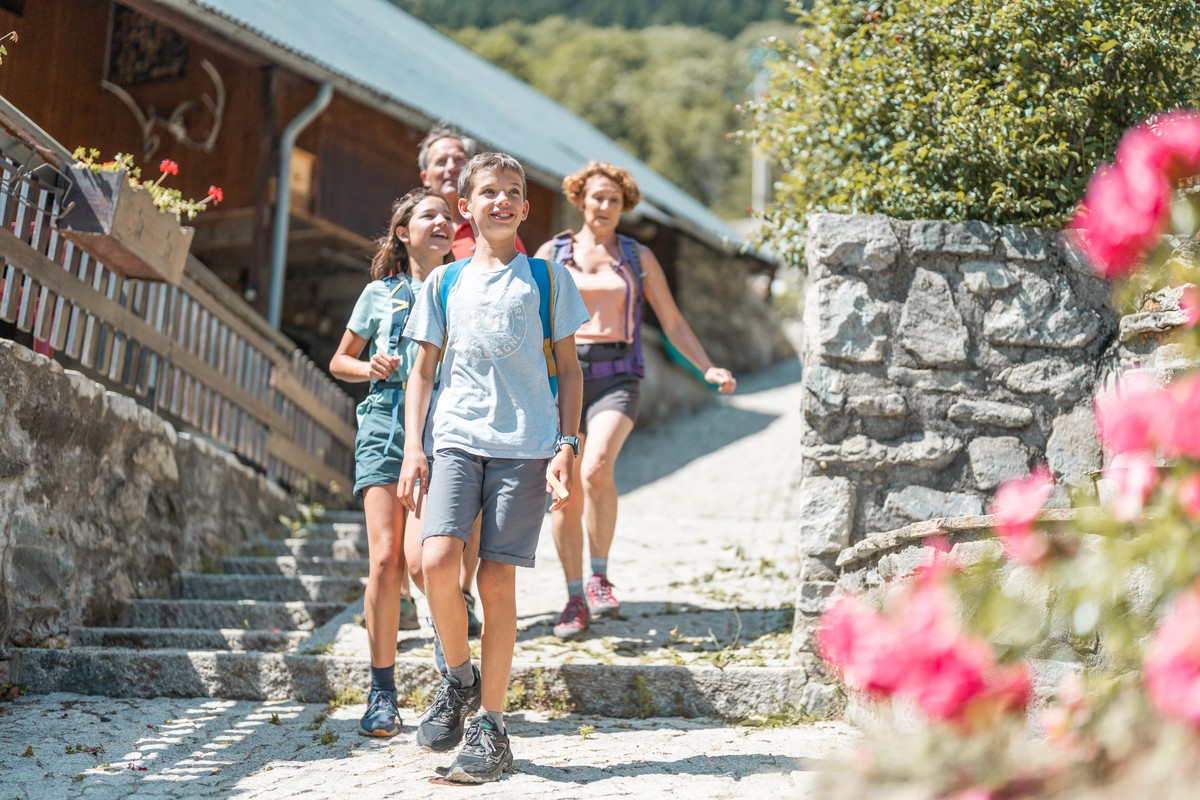
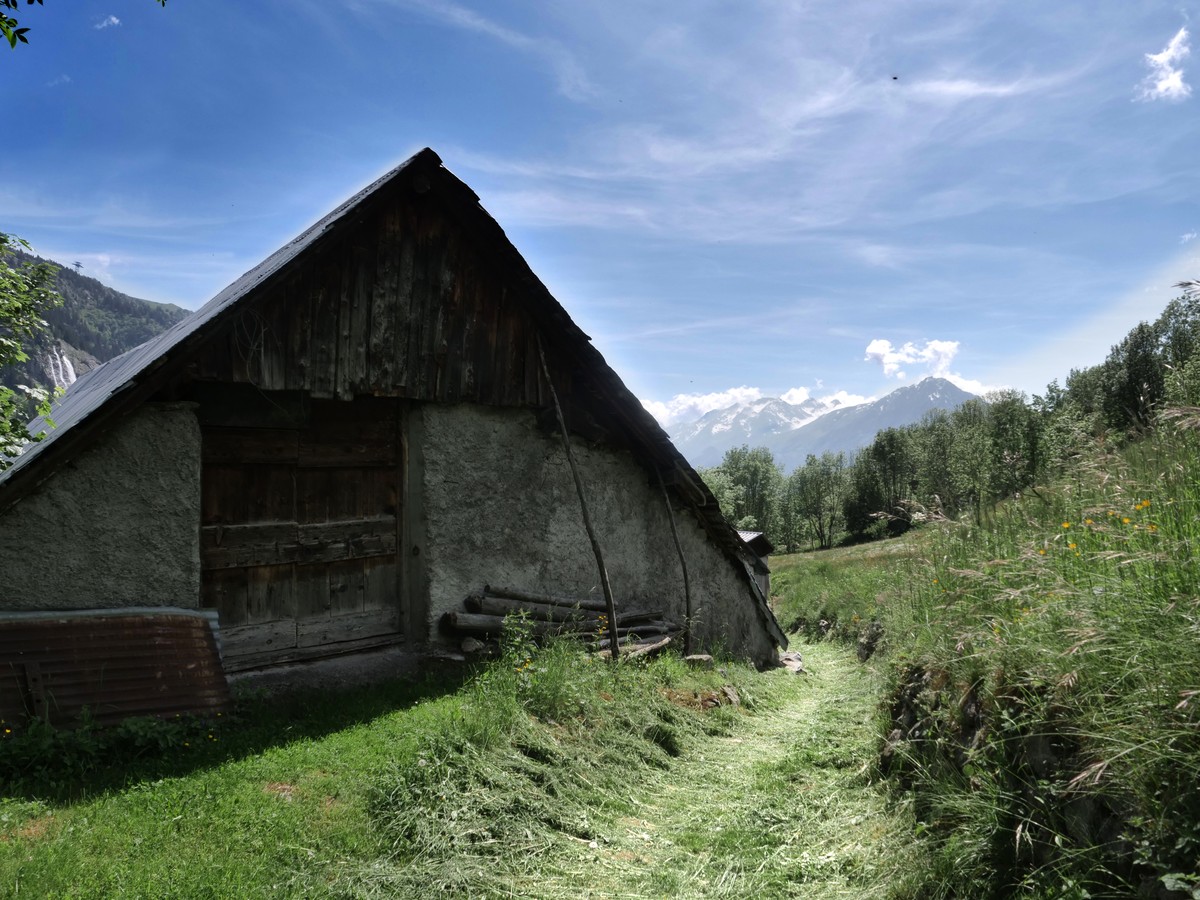
This easy hike introduces you to Vaujany and its highest hamlet: La Villette. A journey to the heart of rural life in the past, a time not so long ago, will be told to you with anecdotes.
Seguir leyendo Voir moins
16/02/2026: Due to a high risk of avalanches, the trail is closed.
Trail conditions as of 14/02/2026: Snowy at the start from Rochas, becoming muddy further along, then packed snow up to Villette.
Practical advice: Easily walkable in hiking boots. Streets and alleys in the villages of Vaujany and Villette are well cleared and easily passable.
Trail Notes – Cultural & Natural Highlights
Origin of the name: According to Abbé Bayle, “the reddish hue of the rocks, lit by the last rays of the sun, gave the Grandes Rousses massif its name.”
La Fare waterfall: Descending from the lake at 2800 m, the waterfall can be visited on a future easy hike.
Dry stone walls (clapiers): Lining the trail, these walls were built from stones cleared from fields to grow rye, barley, oats, potatoes, and cabbage. They marked fields and property boundaries.
Life in Vaujany, 1900: The village had 1,000 inhabitants who relied on farming and livestock. Fields were cultivated up to 1500 m, and forests were sometimes burned to gain new land, giving rise to the nickname “wolf burner,” later adopted by Grenoble’s hockey team.
Seasonal work: In spring, soil moved by snow over winter was carried back to fields. Beech shoots were gathered (“making the leaf”): leaves fed livestock, and wood was used for fires.
La Villette: You now overlook this small hamlet (“little town”), which the trail passes through on the return.
Advice :
- Check the weather conditions before you leave.
- In case of emergency call 112.
- Adapt your clothing to the activity: bring good walking shoes, a windbreaker and a cap ....
- Bring snacks and water.

-
Summer hike : La Villette
Départ Office de Tourisme de Vaujany
38114 VAUJANY
Itinerario
- Idiomas: En Fr
Tarifas
Acceso libre.
Periodo de apertura
A reserva de buen tiempo.
Instalaciones y características
- Animaux acceptés
Características del recorrido
- Distancia:
- 5 km
- Posible desnivel:
- 195 m
- Duración diaria:
- 1 h 30 min
- Nivel
- Verde
- Tipo
- Boucle
